Guide to Technical SEO for Multilingual Websites
What Is Technical SEO for Multilingual Websites?
Technical SEO for multilingual websites is the process of optimizing a site so search engines and AI systems can correctly identify language versions, understand regional targeting, and serve the most relevant page to each user.
Core Technical SEO Pillars for Multilingual Websites
- Hreflang implementation for language and region targeting
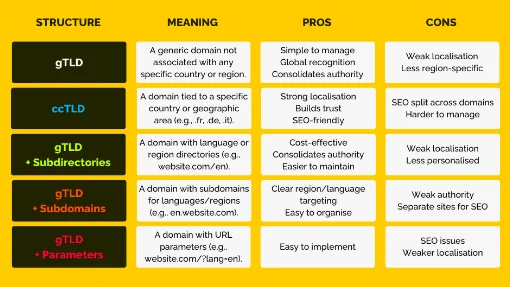
- URL structure for international SEO architecture
- Internal linking for multilingual crawlability
- Indexation control for global visibility
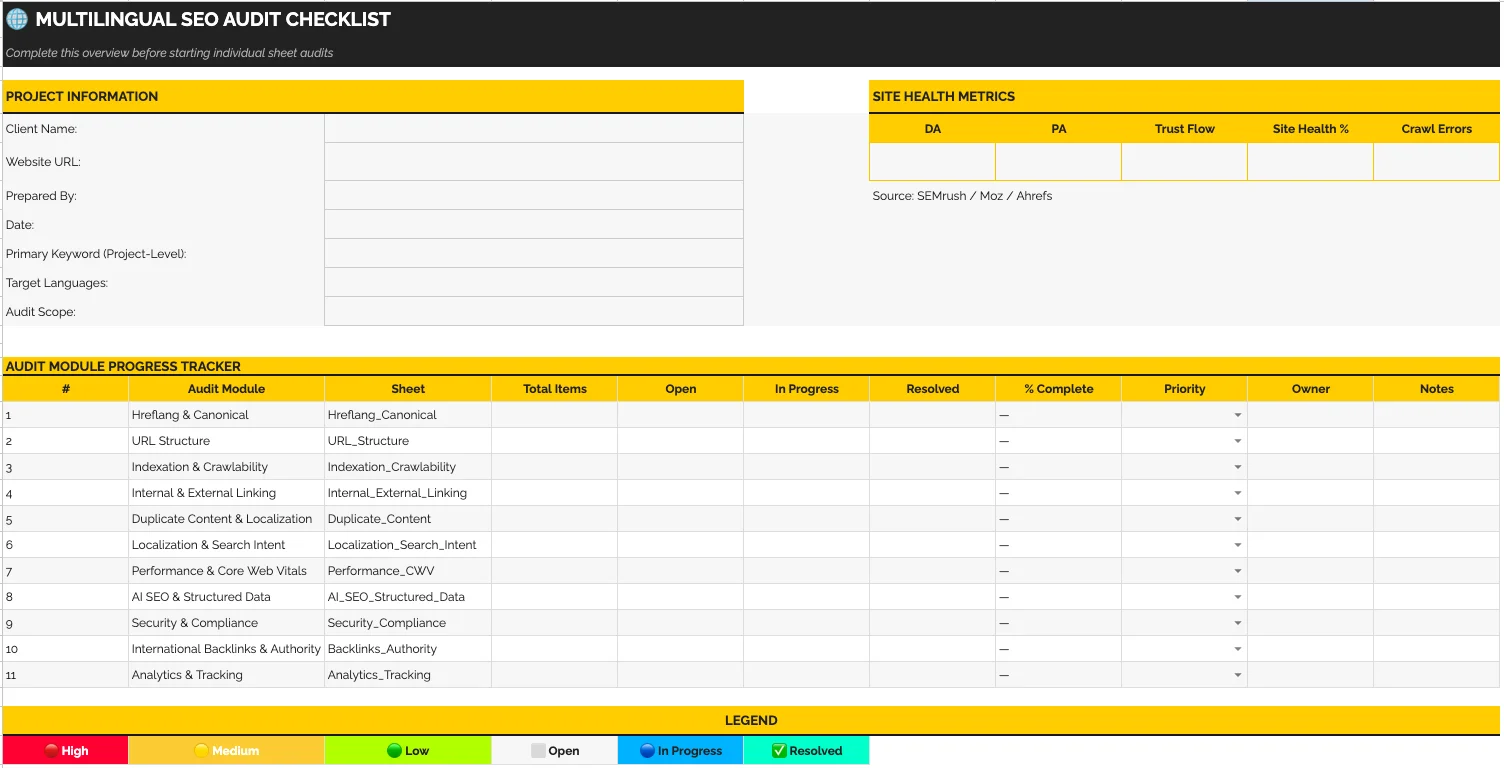
This article covers the technical SEO foundation for multilingual websites. For a full SEO audit across all areas, download the full SEO checklist covering technical SEO, localization, performance, and analytics.
Technical SEO Audit Checklist for Multilingual Websites (Step-by-Step Framework)
1. Hreflang SEO Audit: Language and Regional Targeting Signals
Canonical conflicts with hreflang are a common multilingual SEO failure point. These signals must work together to ensure search engines serve the correct language version.
Hreflang SEO Checklist
- Hreflang tags implemented on all localized pages
- Correct ISO language and region codes (e.g., en, en-US, fr-FR)
- Reciprocal hreflang linking across all language versions
- x-default implemented for fallback or language selection pages
- Each page references itself
Canonical SEO for Multilingual Websites
- Canonical tags point to the correct language version
- Self-referencing canonical tags are implemented
- No cross-language canonical conflicts
2. Multilingual SEO URL Structure: Best Practices for International Targeting
A clear international URL structure supports proper indexing and targeting.
Best Practices for Multilingual SEO URL Structure
- Use consistent URL structures (e.g., /en/, /fr/, /it/)
- Keep URLs static, clean, and crawlable
- Avoid JavaScript-based language switching
- Ensure each language version has a unique, indexable URL
Common International SEO URL Mistakes
- Mixing subdomains, subdirectories, and URL parameters
- Using automatic geo or language redirects that block crawling
- Relying on dynamic URLs that cannot be reliably indexed
3. Multilingual SEO Indexation and Crawlability: Ensuring Full Language Visibility
Proper indexation in multilingual SEO ensures that every language version of a website is discoverable, crawlable, and eligible to rank in search engines.
Multilingual SEO Indexation & Crawlability Checklist
- No unintended noindex tags on localized pages
- robots.txt allows full crawl access to all language versions
- XML sitemaps are segmented by language or region
- All language versions are properly indexed in search engines
- No orphan pages exist within any language section
4. Multilingual SEO Duplicate Content: Preventing Canonical and Localization Issues
Duplicate content issues in multilingual SEO often occur when translated pages are not properly localized or correctly signaled to search engines.
Common Multilingual Duplicate Content Issues
- Incorrect canonical consolidation across language versions
- Thin, unlocalized, or machine-translated content
- Duplicate titles and meta descriptions across languages
How to Fix Duplicate Content in Multilingual SEO
- Use self-referencing canonical tags for each language version
- Fully localize content instead of only translating it
- Adapt titles, meta descriptions, and headings for each market
5. Internal Linking for Multilingual SEO Optimization: Strengthening Language and Regional Context
Internal linking strengthens language signals and improves crawl structure.
Internal Linking SEO Checklist for Multilingual Websites
- Internal links stay within the same language
- No cross-language internal linking errors
- Strong internal linking within each language cluster
- Clear site hierarchy across localized pages
6. Multilingual SEO Performance Optimization: Global Website Speed and Core Web Vitals
Website performance directly impacts rankings, crawl efficiency, and user experience. In multilingual SEO, it must remain consistent globally—not just in a single market.
Global Multilingual SEO Performance Optimization Checklist
- Page load speed tested across multiple geographic regions
- CDN (Content Delivery Network) implemented where required to ensure fast global content delivery and reduce latency across regions
- Core Web Vitals remain stable across all regions: LCP (Largest Contentful Paint), INP (Interaction to Next Paint), CLS (Cumulative Layout Shift)
- Minimal render-blocking resources (CSS and JavaScript) to improve initial load speed and rendering performance
7. AI SEO for Multilingual Websites: Entity Consistency, Search Intent, and Topical Authority
AI-powered search systems evaluate multilingual content based on meaning, entities, and intent—not just keywords. This makes consistency, structure, and localization critical for visibility across different languages and regions.
Entity SEO Consistency Across Languages
Brand names, services, and core topics must remain consistent across all language versions to maintain trust signals and entity recognition in AI search systems.
- Consistent brand names, products, and services across all languages
- Stable entity references in titles, headings, and metadata
- Aligned terminology for core topics and concepts
- Consistent structured data (schema markup) across all language versions
Multilingual Search Intent Optimization
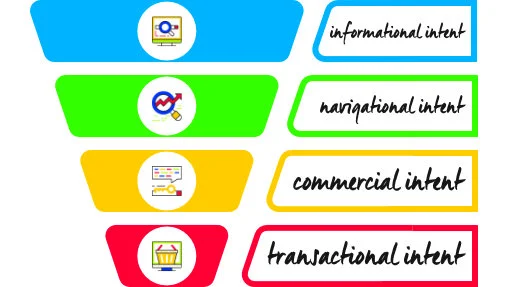
Content must be adapted to local search intent—not just translated linguistically. Each market differs in how users search, what they expect, and how queries are structured.
- Adapt content to local behavior
- Reflect regional query patterns
- Match user expectations per market
Topical Authority in Multilingual SEO
Each language version builds its own topical authority. Weak or incomplete localization can reduce performance across markets and limit AI visibility.
- Build authority per language
- Avoid weak or partial localization
- Maintain depth across all regions
AI Crawlability SEO Checklist
- Clean HTML output (avoid JavaScript-heavy rendering for core content)
- Consistent heading structure across all language versions
- Localized structured data (schema markup per language/region)
- Fast, accessible rendering for AI SEO and search engine crawlers
How to Scale Multilingual SEO with Technical Consistency
Scaling multilingual SEO requires alignment across hreflang, URL structure, indexation, internal linking, performance, content, and localization strategy. When these elements work together, they ensure stable visibility and accurate targeting across all markets.
To streamline your workflow, download the complete SEO audit checklist for multilingual websites, including technical SEO, analytics and tracking, localization and content adaptation, and performance monitoring.
Multilingual SEO Audit Checklist: FAQs
What is a technical SEO audit checklist for multilingual websites?
Why is technical SEO for multilingual websites more complex than standard SEO?
What is the most common technical SEO mistake in multilingual websites?
Is translation enough for SEO for multilingual websites?
How does technical SEO internal linking affect multilingual websites?
What is the role of technical SEO in multilingual websites for AI visibility?

Meet the Author: Catherine Gason, International SEO & Integrated Digital Marketing Consultant