
The mechanism, in detail
Why doesn’t a Google SEO strategy work for Naver?
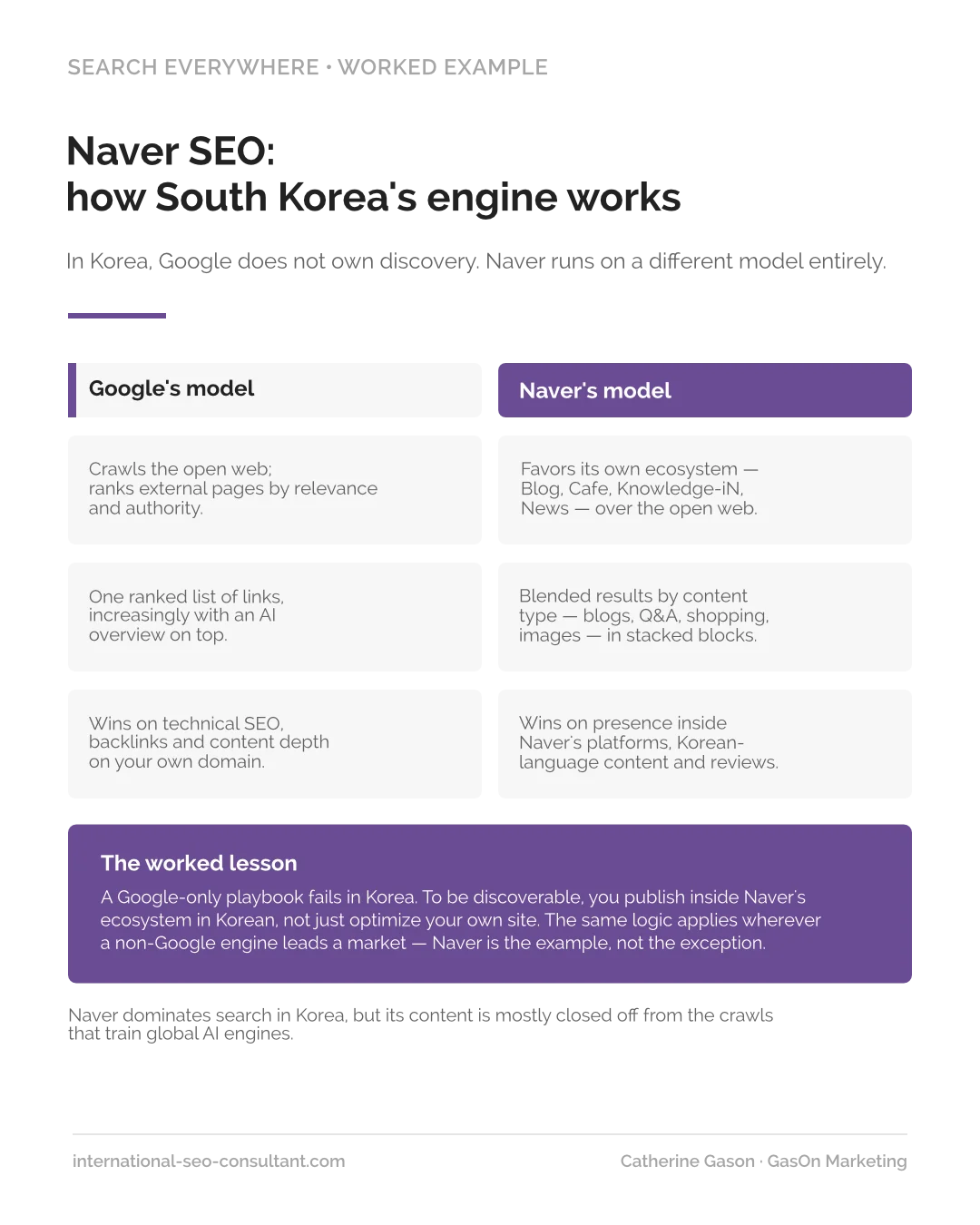
Because Naver isn’t built like Google. Google crawls the open web and ranks external pages by relevance and authority; Naver favors content published inside its own ecosystem, and surfaces it in blended blocks by type. A brand that has perfected technical SEO and backlinks on its own domain can still be nearly invisible on Naver, because that isn’t where Naver looks first.
What is Naver’s ecosystem, and why does it matter?
Naver runs a set of owned platforms: Blog for articles, Cafe for communities, Knowledge-iN for questions and answers, plus News and Shopping. Naver shows content from these platforms first. To be visible on Naver, a brand needs a presence inside them, such as a Naver Blog or activity in relevant Cafes, rather than relying on its own website, which Naver ranks lower.
How does Naver display results differently from Google?
Google typically returns one ranked list of links, increasingly with an AI Overview on top. Naver blends results by content type into stacked blocks, each a separate module: blogs, Q&A, images, shopping, news. To be visible, a brand needs to appear in the blocks that matter for a query, so it pays to produce the content types Naver shows rather than compete for one ranked position.
Does the Korean language itself matter for Naver visibility?
Yes, a great deal. Naver is built around Korean-language content and a Korean user base, and its ecosystem rewards native Korean material and local engagement such as reviews. Content that reads as translated competes poorly for Korean-language queries, and the engagement that lifts it comes from Korean users. Being discoverable on Naver means publishing native Korean content inside its platforms. That is a market-entry decision, not something you add to an English site at the end.
Does Naver have its own AI answers?
Yes. Naver’s AI Briefing summarizes an answer above the results and shows the sources it used, and at the start of 2026 it appeared on more than a fifth of Naver searches. Naver has published guidelines for what it selects, which favor first-hand experience and original material over content assembled to rank. Being cited there is a separate job from ranking in the blocks below it.
Is Naver part of AI visibility work like ChatGPT or Perplexity?
It is, but only inside South Korea. Naver runs its own AI answers over its own ecosystem, so the way to be cited there is to publish inside Naver, in Korean. It doesn’t feed the global engines: much of Naver’s content sits inside its platforms rather than on the open web the global engines read. A brand cited across the global engines can still be absent from Naver’s answers.
More in Search Everywhere Optimization
The other guides in this section, each answering its own question.
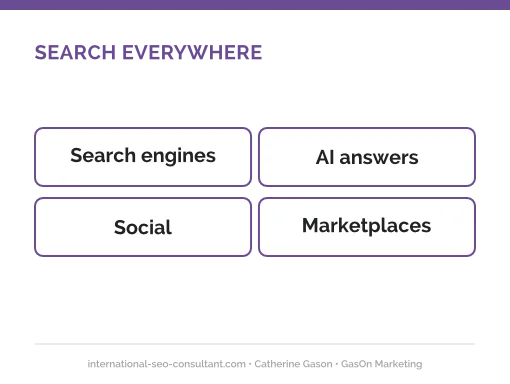
Search Everywhere Optimization: a practical guide
Buyers no longer search in one box, and each surface rewards something different.
Read Search Everywhere • Strategy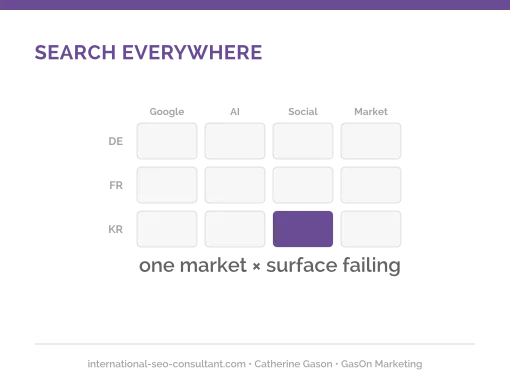
How to measure international visibility, market by market
One global number hides the gaps; a market-by-surface grid shows where you are invisible.
Read Market Visibility • Measurement